The services that grow an MSP’s margins in 2026 aren’t the ones anybody can resell. They’re the specialized, outcome-based ones a customer can’t buy off a shelf — and content assurance is one of them.— The Reveille Perspective
Every MSP knows the ceiling on break-fix: it’s reactive, it competes on price, and it doesn’t scale. The growth is in specialized, outcome-based services — the kind that support premium pricing because the customer can’t easily insource them. The data backs it up: specialized MSPs command 10–20% premium pricing and see roughly 30% higher margins, and recurring services now drive the large majority of MSP income.
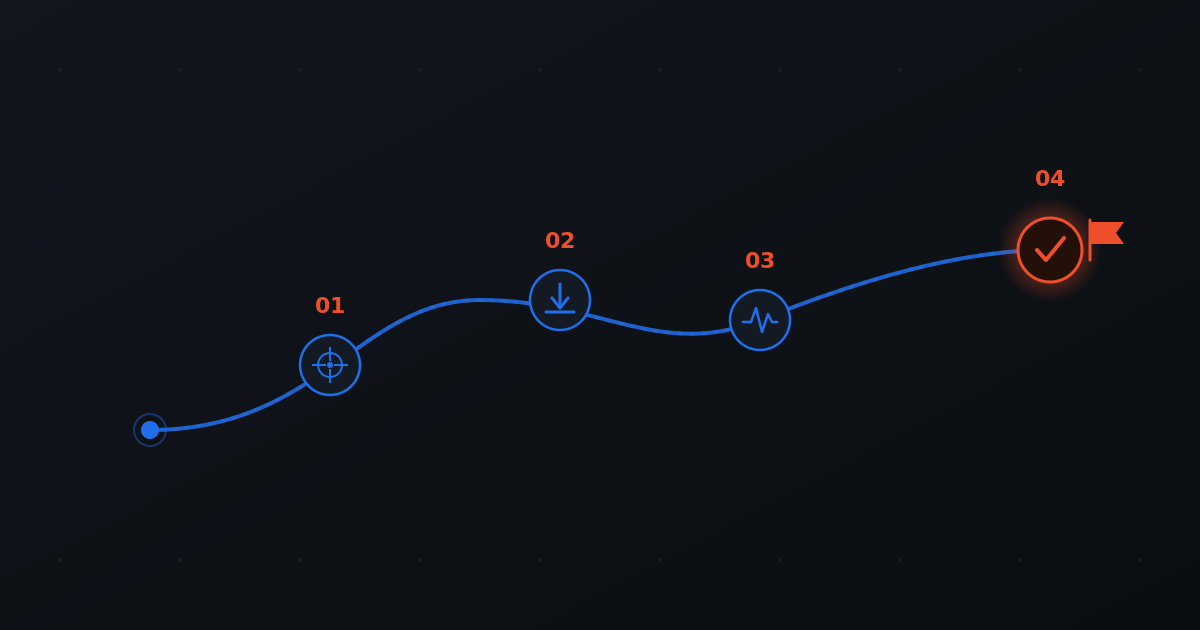
Content assurance is one of those services, and it’s newly urgent: as your customers’ Enterprise Content Management (ECM) and Intelligent Document Processing (IDP) platforms go AI-first, the content layer feeding them becomes the thing most likely to fail silently — and the thing nobody is watching. This is the practical playbook for standing that service up with SENTRY, the Reveille partner program built to make it a repeatable, recurring line of business. Four moves: what you sell, how you deploy, how you package and price, and how you prove it.
Quick answers
How do MSPs make money from content-layer assurance?
What do you need to stand up a SENTRY practice?
How should an MSP price a content-assurance service?
How is this different from reselling a monitoring tool?
01 — What You Sell
An Outcome, Not Another Dashboard
Name the service in the customer’s language, not the tool’s.
The offer is a managed service that continuously assures the content and document workflows a customer’s business — and its AI — depend on. You prove workflow-level service levels, catch the silent failures the platform’s own status page misses, and self-heal issues across vendor boundaries before they become tickets. The category Reveille pioneered is Content Observability; what you sell your customer is simpler to say: we make sure the work actually got done, and we can prove it.
The distinction that closes deals is this: platform SLA is not workflow SLA. A cloud ECM availability number means the API responded — not that an invoice was captured, classified, routed, and committed correctly. You’re selling the difference between those two things, and you’re the only party positioned to measure it independently, because you’re neither the platform vendor nor the customer.
02 — Stand It Up
A 30-Day Rollout
SENTRY is multi-tenant and cloud-native, so a first customer goes live in weeks, not quarters.
| Week | What you do | What the customer gets |
|---|---|---|
| Week 1 — Scope | Inventory the customer’s ECM, IDP, and automation platforms and the workflows that matter most (claims, invoices, records). | A clear map of what will be assured and which business processes it protects. |
| Week 2 — Deploy | Stand up SENTRY in the customer’s cloud; deploy collectors and connect the signal to your ticketing (ConnectWise, Kaseya/Datto, ServiceNow). | Coverage live inside their tenant — content never leaves their boundary. |
| Week 3 — Baseline | Let the purpose-built tests establish normal, tune AI/ML anomaly detection, and turn on self-healing for the safe, high-frequency issues. | Dynamic thresholds instead of noisy static alerts; first issues auto-resolved. |
| Week 4 — First review | Deliver the first monthly assurance report and walk the customer through what was caught, fixed, and prevented. | Proof — in writing — that a competitor can’t put on the table. |
03 — Package & Price
Sell Outcomes in Tiers
Price on coverage and outcome, not seats — that’s where the premium lives.
Keep the packaging simple and let each tier add measurable value. A clean three-tier shape maps to how customers buy and gives you a built-in expansion path as they add platforms and AI workloads.
| Tier | What’s included | Who it’s for |
|---|---|---|
| Watch | Continuous monitoring and alerting across ECM, IDP & automation, routed into their existing tools. | Customers who need visibility first and a low-friction entry point. |
| Assure | Workflow-level SLA measurement and the monthly independent assurance report. | Customers with audit, compliance, or SLA obligations to prove. |
| Assure+ | Self-healing automation that auto-resolves issues across vendor boundaries before they reach the queue. | Customers running AI/agentic workloads who need failures caught and fixed fast. |
Pricing Principle
Every tier reduces something the customer can measure — downtime, tickets, audit exposure. That’s what justifies recurring, premium pricing. You’re not billing for a login; you’re billing for an outcome they’d have to staff a team to reproduce.
04 — Prove It Every Month
The Report Is the Product
Renewals and expansion are won in the monthly review, not the sales cycle.
The habit that makes this practice sticky is the monthly assurance report: what was caught, what self-healed, which SLAs held, and what would have become a business problem if no one was watching. It reframes your role from the vendor a customer calls when something breaks to the partner who proves it didn’t — and it turns every added platform into an obvious upsell. Reveille partners typically show customers 95% SLA attainment, 50%+ fewer downtime incidents and tickets, and 20+ hours a week reclaimed from firefighting. Put those numbers in front of a customer every month and price stops being the conversation.
Reveille SENTRY — the MSP Partner Program
SENTRY gives you the multi-tenant, co-branded platform, the deployment path, and the reporting to run this as a practice — not a one-off project. You own the customer relationship and the recurring revenue; SENTRY is the engine underneath.
Break-fix will always be there, and it will always be a race to the bottom. A content-assurance practice is the opposite: specialized, recurring, and stickier every month it runs. The playbook isn’t complicated — scope it, deploy it, package it, and prove it.
The MSPs who stand this up now will be the ones proving workflow SLAs their competitors can’t even see.